Delhi-NCR Air Quality Improves As GRAP Stage 3 Curbs Are Revoked
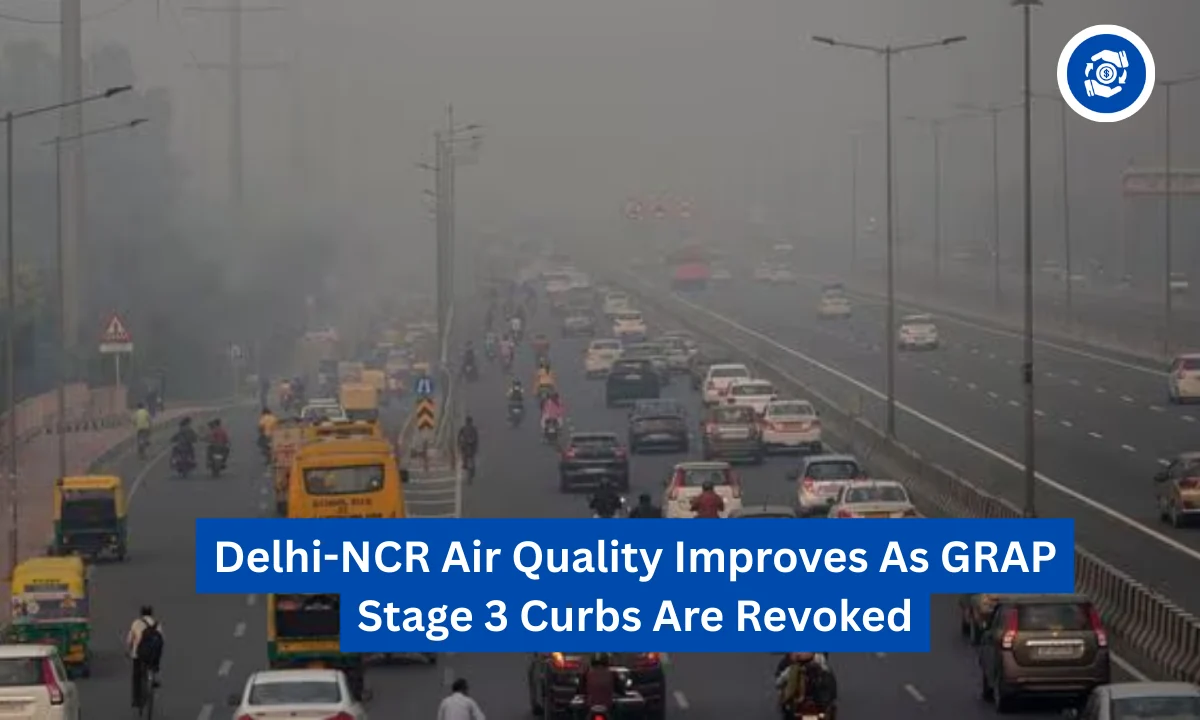
Delhi-NCR Air Quality Improves As GRAP Stage 3 Curbs Are Revoked | Image With Live Mint
The Commission for Air Quality Management has cancelled all restrictions under Stage 3 of the Graded Response Action Plan (GRAP) across Delhi-NCR after air quality showed a steady improvement.
Delhi’s 24-hour average AQI dropped from 380 to 236, moving out of the very poor and near-severe zone into the poor category. However, Stage 1 and Stage 2 measures will continue to remain in force so that pollution levels do not rise again.
Key Takeaways
- Stage 3 GRAP restrictions revoked across Delhi-NCR
- AQI improved from 380 to 236 within 24 hours
- Vehicle curbs on BS-III petrol and BS-IV diesel lifted
- Construction and industrial restrictions under Stage 3 withdrawn
- Stage 1 and Stage 2 measures remain active
- Authorities link the improvement to changing weather conditions
Also Read: 10x Insurance For Family Security: Why The Right Cover Matters More Than Ever
Why Stage 3 Was Withdrawn
The latest air quality readings showed a clear downward trend. This allowed authorities to roll back strict restrictions that had affected travel, work activity and daily movement across the NCR. Officials said that improved wind flow and light rain helped disperse pollutants, which brought relief after weeks of tight curbs.
Stage 3 had earlier been activated when the AQI crossed the severe threshold. At that point, authorities restricted non-essential construction, limited several industrial activities and banned BS-III petrol and BS-IV diesel four-wheelers across Delhi and NCR districts.
With the air now in the poor range rather than very poor or severe, these restrictions have been formally withdrawn.
What Stage 3 Curbs Meant
Under Stage 3, activities that were halted included:
- Non-essential construction and demolition
- Operations of stone crushers and RMC plants
- Brick kilns and select mining activities
- Entry and movement of older BS-III petrol and BS-IV diesel cars
- Non-essential diesel-powered medium goods vehicles
- Diesel buses that did not meet CNG, electric or BS-VI norms
- Industries using non-approved fuel sources
Many workers, drivers and small contractors were hit hard by these measures. There were public appeals online requesting relief, as economic pressure had built over weeks of low activity.
What Still Remains In Force
While Stage 3 is gone, the focus now remains on prevention. Stage 1 and Stage 2 measures continue, which include:
- Stronger checks on vehicle emission norms
- Controls on open burning
- Restrictions on coal and firewood use
- Limited diesel generator activity
- Increased road cleaning and dust suppression
- Traffic management in high-congestion areas
These steps aim to stabilise the AQI so the city does not slide back into severe levels again.
Public Response And Concerns
Recent online reactions showed mixed emotions. Many commuters expressed relief that BS-IV diesel vehicles can now enter Delhi again, especially those travelling from Gurugram and Noida. Construction workers and small business owners also welcomed the rollback as work can resume.
At the same time, there remains clear frustration about livelihoods lost during the curbs. Some questioned why certain cities with higher AQI levels did not face similar action. Others highlighted that temporary bans do not resolve long-term structural causes of winter pollution.
Concerns over health risks also continue, with many residents saying pollution remains uncomfortable even when AQI falls into the poor range.
Current Air Quality And Outlook
Air quality monitors showed that Delhi’s AQI at 4 PM on January 2 was 236, which falls under the poor category. This marks a strong improvement from 380 a day earlier, which is near the severe line.
Authorities expect weather support to continue for the next few days, although winter pollution remains a recurring challenge in Delhi-NCR every year. The government has indicated that enforcement, technology pilots and public cooperation will remain important through the season.
Why GRAP Exists
GRAP acts as an emergency framework. It applies different restrictions step-by-step depending on pollution levels. This allows authorities to prevent the situation from worsening when the air becomes hazardous.
The CPCB defines AQI levels as follows:
- 0-50: Good
- 51-100: Satisfactory
- 101-200: Moderate
- 201-300: Poor
- 301-400: Very Poor
- 401-500: Severe
Stage 3 is triggered when levels stay in the severe band. The recent improvement allowed Delhi to step down from that threshold.
A Look Back At The Season
The winter months saw repeated spikes due to slow winds, temperature drops and stagnant air. Restrictions came in multiple phases, starting from Stage 1 and moving up as conditions worsened. Stage 4 was also briefly invoked earlier when the situation turned critical.
Officials said the city recorded better average air quality in 2025 compared to previous years, excluding the pandemic-affected period. However, many residents believe more work must be done on regional coordination, cleaner transport and industrial control.
The Road Ahead
For now, residents, commuters and businesses get some breathing space. But authorities remain alert. If pollution climbs again, higher-stage restrictions could be reinstated at short notice.
The focus remains on keeping AQI stable, encouraging public transport, discouraging unnecessary burning and tightening industrial checks. Citizens are urged to follow guidelines, especially sensitive groups such as children, elderly residents and those with respiratory conditions.
Delhi continues to walk a thin line every winter season. The removal of Stage 3 brings relief, but the larger challenge of sustainable clean air remains.
Tags: Delhi Air Quality, GRAP Stage 3, CAQM Delhi, NCR Pollution Update, Delhi AQI Today, Pollution Control Measures
Related Posts :






Share This Post