Fractal Analytics Share Price Target 2030: Can This AI Stock Deliver 3X Returns
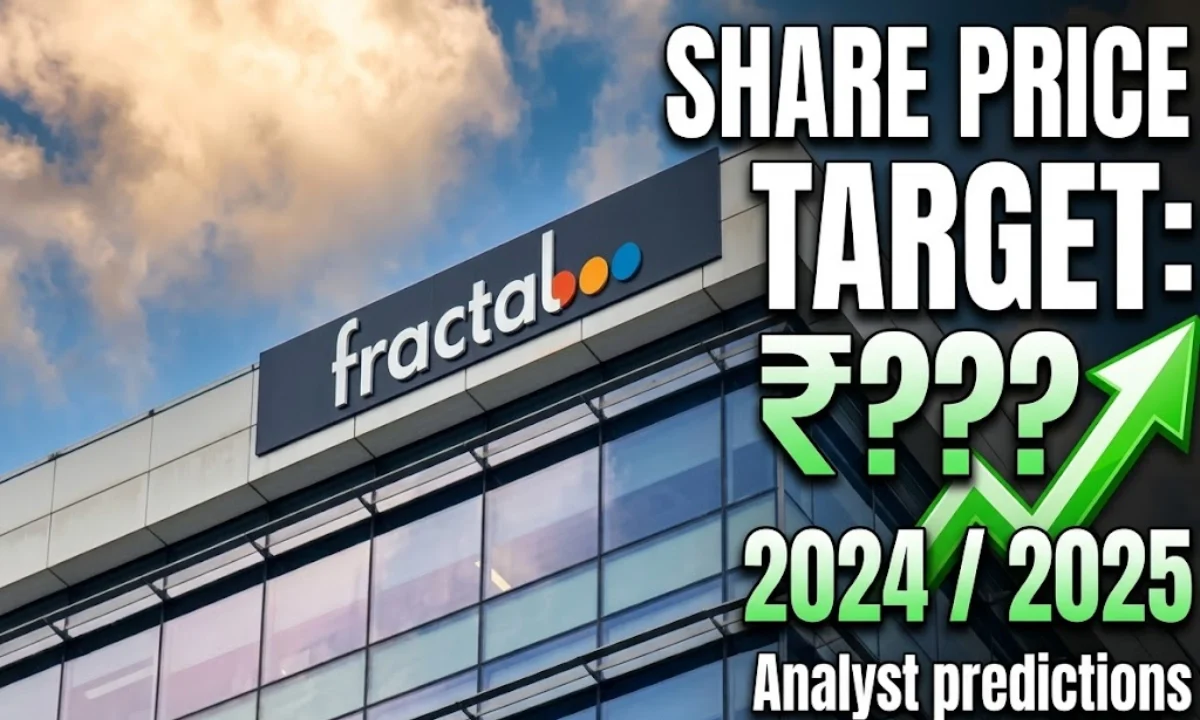
Fractal Analytics share price target 2030
Fractal Analytics is India’s first listed pure-play enterprise AI company. It listed on the stock exchanges in February 2026. The IPO was priced at ₹857 to ₹900 per share. The stock listed below the issue price at ₹876. Since then, it has traded in a range of ₹800 to ₹850. Many investors want to know if this stock can reach ₹2,500 by 2030.
In this article we will see in detailed share price target of Fractal Analytics for 2030 and try to guess how much returns can you expect from Fractal Analytics in upcoming years. We look at
- financial data.
- AI market opportunity.
- what analysts are saying.
- the risk factors.
All the numbers are based on official company filings and market analysis.
Table of Contents
How Fractal Analytics Stock Has Performed Since Listing
Before we look at 2030 targets, let us understand how the stock has moved since its IPO. This helps you see the current trend.
Stock Price Journey From IPO To Now
| Date | Event | Price (₹) | Change From Issue Price |
|---|---|---|---|
| February 9-11, 2026 | IPO Open | 900 (Upper Price) | Base Price |
| February 16, 2026 | Listing Day | 876 | -2.7% |
| February 16, 2026 | Closing Price | 873.70 | -2.9% |
| March 2026 | Post Q3 Results | 820-850 | -6% to -9% |
| April 2026 | Current Trading | 820-830 | -8% to -9% |
The table shows that the stock never gave listing gains. It listed below the issue price and fell further. This is unusual for an AI company. The market was cautious about high valuations and IT sector weakness. The stock is down about 8% from its IPO price.
IPO Subscription Data Shows Moderate Demand
| Investor Category | Subscription (Times) | What It Means |
|---|---|---|
| Qualified Institutional Buyers (QIB) | 4.18x | Strong interest from big funds |
| Non-Institutional Investors (NII) | 1.06x | Weak HNI interest |
| Retail Individual Investors (RII) | 1.03x | Moderate retail interest |
| Overall | 2.66x | Below average for mainboard IPOs |
The IPO was subscribed 2.66 times. This is moderate. The QIB portion saw strong demand at 4.18 times. But NII and retail portions were barely subscribed. This mixed response reflected caution about the valuation. The company had to cut the IPO size by 40% from the original plan.
Fractal Analytics Share Price Target 2030: Month By Month Forecast
Now let us look at the share price targets for 2030. These targets are based on current trends, analyst estimates, and AI sector growth potential.
Conservative Price Target For 2030
| Month | Minimum Price (₹) | Maximum Price (₹) | Expected Average (₹) |
|---|---|---|---|
| January 2030 | 1800 | 2100 | 1950 |
| February 2030 | 1850 | 2150 | 2000 |
| March 2030 | 1900 | 2200 | 2050 |
| April 2030 | 1950 | 2250 | 2100 |
| May 2030 | 2000 | 2300 | 2150 |
| June 2030 | 2050 | 2350 | 2200 |
| July 2030 | 2100 | 2400 | 2250 |
| August 2030 | 2150 | 2450 | 2300 |
| September 2030 | 2200 | 2500 | 2350 |
| October 2030 | 2250 | 2550 | 2400 |
| November 2030 | 2300 | 2600 | 2450 |
| December 2030 | 2200 | 2500 | 2350 |
The conservative target for December 2030 is ₹2,200 to ₹2,500. This represents a 2.75x to 3x return from the current price of ₹820 to ₹830. This target assumes steady growth in revenue and improving profitability.
How The Target Is Calculated
The target of ₹2,500 by 2030 is based on several factors:
- Revenue growth of 20% to 25% per year
- EBIT growth of 27% per year as per analyst estimates
- Margin expansion from 17.8% to 20% or higher
- PE multiple of 25x to 30x
- AI market growth at 17% CAGR through 2030
If the company executes well, the stock can reach these levels. But execution is key.
Why Fractal Analytics Can Grow Till 2030
Several factors support the bullish case for Fractal Analytics. Let us look at each one.
Large And Growing Enterprise AI Market
The global enterprise AI and analytics market is projected to grow at a CAGR of 17% through 2030. This is a massive opportunity. The market size is expected to reach $593 billion.
Fractal Analytics operates at the intersection of analytics, AI platforms, and domain-specific consulting. It is a direct beneficiary of this shift. The company helps Fortune 500 clients make data-driven decisions. As more enterprises adopt AI, demand for Fractal’s services will grow.
Strong Revenue Growth Track Record
| Financial Year | Revenue (₹ Cr) | Growth Rate |
|---|---|---|
| FY21 | 873 | Base |
| FY22 | 1,295 | 48.3% |
| FY23 | 1,985 | 53.3% |
| FY24 | 2,196 | 10.6% |
| FY25 | 2,765 | 25.9% |
Fractal has grown revenue at a CAGR of 33.4% over the last 5 years. In FY25, revenue grew 25.9% to ₹2,765 crore. In Q3 FY26, revenue grew 21% year on year to ₹854 crore. This shows consistent growth.
If the company maintains 20% growth, revenue can reach ₹8,000 to ₹10,000 crore by 2030. This will drive the stock price higher.
Improving Profitability And Margins
| Metric | FY24 | FY25 | Q3 FY26 | Trend |
|---|---|---|---|---|
| PAT (₹ Cr) | -55 | 221 | 100 | Improving |
| Adjusted EBITDA Margin | 17.4% | 17.4% | 17.8% | Stable |
| Gross Margin | 47% | 47% | 47.2% | Stable |
The company swung from a loss of ₹55 crore in FY24 to a profit of ₹221 crore in FY25. This is a big turnaround. In Q3 FY26, profit was ₹100 crore. Adjusted EBITDA margin improved to 17.8%.
Analysts expect EBIT CAGR of 27% from FY26 to FY30. This means profits will grow faster than revenue. This is positive for the stock price.
High Client Retention And Expansion
| Metric | Value | What It Means |
|---|---|---|
| Net Revenue Retention | 114-115% | Clients are spending more |
| Net Promoter Score | 76-77 | High client satisfaction |
| Clients > $20 million | 6 | Large accounts growing |
| Clients > $1 million | 58 | Strong mid-tier base |
Net Revenue Retention of 114% means existing clients are increasing their spending. This is a sign of strong product-market fit. The NPS score of 76-77 is excellent. It shows clients are happy and likely to stay.
Strong AI Products And Patents
Fractal has built several AI products that are beating global benchmarks:
- Vaidya.ai 2.0: First AI model to score 50+ on OpenAI’s HealthBench. It outperformed ChatGPT-5 and Gemini Pro 3.
- PiEvolve: Ranked among top performers on OpenAI’s MLE-Bench. It outperformed agents from Google, Microsoft, and Meta.
- Flyfish.ai: Intelligent sales agents for B2B growth.
- Asper.ai: Interconnected decisions for revenue growth.
The company has 66+ patents. It invests 6.4% of revenue in R&D. This focus on innovation creates competitive advantage.
Government Support For AI In India
Fractal is included in the IndiaAI Mission. It is one of 12 organizations selected for sovereign AI models. This includes Sarvam AI, IIT Bombay, BharatGen, and Tech Mahindra.
The government is funding indigenous AI development. This creates tailwinds for Fractal. The company gets access to government projects and support. This is a long term positive.
Risks That Can Stop Fractal Analytics From Reaching 2030 Targets
Every investment has risks. Fractal Analytics is no exception. Here are the main risks you should know.
Volatile Profit History
| Year | PAT (₹ Cr) | Status |
|---|---|---|
| FY21 | 36 | Profit |
| FY22 | -148 | Loss |
| FY23 | 194 | Profit |
| FY24 | -55 | Loss |
| FY25 | 221 | Profit |
Profits have been volatile. The company made losses in FY22 and FY24. This shows that profitability is not stable. If the company faces another downturn, profits could fall again.
High Valuation Compared To Peers
| Metric | Fractal Analytics | Industry Average |
|---|---|---|
| P/E Ratio | 70x (FY25) | 22x |
| P/B Ratio | 1.51x | Varies |
At the IPO price of ₹900, Fractal was valued at 70x FY25 earnings. This is a premium valuation. The industry average P/E is around 22x. This high valuation means the stock is sensitive to any negative news.
Low Promoter Holding
| Period | Promoter Holding |
|---|---|
| Feb 2025 | 16.97% |
| Feb 2026 | 18.18% |
Promoter holding is only 16.97% to 18.18%. This is low. It means promoters have limited control. Institutional investors hold a large share. While this shows confidence, low promoter holding can be a concern for some investors.
Dependence On US Market
Fractal generates the majority of its revenue from overseas markets, especially the US. This creates currency risk. It also creates geopolitical risk. If US clients cut spending, revenue will fall.
High Client Concentration
The company has revenue concentration from a limited number of large clients. If any major client leaves, revenue will be impacted. The company needs to diversify its client base.
Competition In AI Space
The AI market is getting crowded. Global giants like Google, Microsoft, and Meta are investing heavily. Indian IT services companies are also building AI capabilities. Fractal faces competition from:
- LatentView Analytics
- Tata Elxsi
- IT services companies with AI divisions
- Global AI consulting firms
If competition intensifies, pricing power may reduce. Margins could come under pressure.
Rapidly Evolving AI Regulations
AI regulations are changing fast. New rules on data privacy, AI governance, and ethical AI are coming. Fractal will need to invest in compliance. This could increase costs.
Fractal Analytics Share Price Target 2026 To 2030: Year By Year Roadmap
Let us look at how the stock can move from now till 2030. This gives you a roadmap for investment.
Share Price Target For 2026
| Month | Minimum Price (₹) | Maximum Price (₹) |
|---|---|---|
| January 2026 | 900 | 1000 |
| June 2026 | 950 | 1050 |
| December 2026 | 1050 | 1150 |
For 2026, analysts expect the stock to trade between ₹1,050 and ₹1,150 by year end. This assumes the company delivers consistent quarterly results. If results are weak, the stock may stay below ₹1,000.
Share Price Target For 2027
| Month | Minimum Price (₹) | Maximum Price (₹) |
|---|---|---|
| January 2027 | 1100 | 1200 |
| June 2027 | 1200 | 1300 |
| December 2027 | 1300 | 1400 |
By 2027, the company should see benefits from AI adoption. Revenue should cross ₹4,000 crore. Profit should be stable. The target for 2027 is ₹1,300 to ₹1,400.
Share Price Target For 2028
| Month | Minimum Price (₹) | Maximum Price (₹) |
|---|---|---|
| January 2028 | 1350 | 1450 |
| June 2028 | 1400 | 1500 |
| December 2028 | 1500 | 1600 |
In 2028, Fractal should be a established AI platform provider. Long term contracts with enterprise clients will provide stable revenue. The target for 2028 is ₹1,500 to ₹1,600.
Share Price Target For 2029
| Month | Minimum Price (₹) | Maximum Price (₹) |
|---|---|---|
| January 2029 | 1500 | 1700 |
| June 2029 | 1700 | 1850 |
| December 2029 | 1800 | 2000 |
By 2029, the company should have strong global presence. AI products should contribute a larger share of revenue. The target for 2029 is ₹1,800 to ₹2,000.
Share Price Target For 2030
| Month | Minimum Price (₹) | Maximum Price (₹) |
|---|---|---|
| January 2030 | 1800 | 2100 |
| June 2030 | 2000 | 2300 |
| December 2030 | 2200 | 2500 |
The 2030 target is ₹2,200 to ₹2,500. This assumes the company executes its growth plans and the AI market grows as expected.
What Experts And Analysts Are Saying
Different analysts have different views on Fractal Analytics. Let us look at what they say.
Bull Case: Why Some Analysts Are Positive
- Prabhudas Lilladher has given a buy rating with a target of ₹1,260. This is 54% upside from current levels.
- Strong Q3 FY26 results: Revenue grew 21%. PAT crossed ₹100 crore. This shows the company is delivering.
- AI tailwinds: The enterprise AI market is growing at 17% CAGR. Fractal is well positioned.
- High NRR: Net Revenue Retention of 114% shows strong client relationships.
- Analyst estimates: Average target price is ₹991 to ₹1,110. This is 20% to 35% upside.
- Long term growth: One brokerage expects 20% revenue CAGR and 27% EBIT CAGR from FY26 to FY30.
Bear Case: Why Some Investors Are Cautious
- Muted IPO listing: The stock listed below issue price. This shows weak demand.
- High valuation: P/E of 70x is expensive compared to peers.
- Profit volatility: The company has made losses in 2 of the last 5 years.
- IT sector weakness: The broader IT sector is facing headwinds. This affects sentiment.
- Low promoter holding: 16.97% promoter stake is lower than ideal.
- Post-IPO correction: The stock is down 8% from IPO price. This shows cautious sentiment.
Key Financial Metrics You Should Track
If you invest in Fractal Analytics, watch these numbers every quarter.
Revenue Growth
| Quarter | Revenue (₹ Cr) | Growth (YoY) |
|---|---|---|
| Q3 FY25 | 706 | Base |
| Q3 FY26 | 854 | 21% |
| Q4 FY26 | Expected | Watch for 20%+ |
Revenue should grow at 20% to 25% per year. If growth falls below 15%, it is a warning sign.
Profit Growth
| Period | PAT (₹ Cr) | Growth |
|---|---|---|
| FY24 | -55 | Loss |
| FY25 | 221 | Turnaround |
| 9M FY26 | 171 | Strong |
| FY26E | 250-300 | Expected |
Profit should show consistent growth. If the company reports a loss, the stock will fall sharply.
Margin Trends
| Metric | Target Level | Warning Level |
|---|---|---|
| Adjusted EBITDA Margin | Above 18% | Below 15% |
| Gross Margin | Above 47% | Below 45% |
| Net Profit Margin | Above 8% | Below 5% |
Margins should expand as the company scales. If margins contract, it signals pricing pressure.
Client Metrics
| Metric | Target | Watch For |
|---|---|---|
| Net Revenue Retention | Above 110% | Below 105% |
| NPS | Above 75 | Below 70 |
| New $1M+ Clients | 5+ per year | Less than 3 |
Client metrics show the health of the business. NRR above 110% means clients are spending more.
Should You Buy Fractal Analytics Stock For 2030
This section helps you decide if Fractal Analytics fits your investment goals.
Who Should Buy This Stock
- Long term investors who can hold for 5 years or more. The 2030 story needs time to play out.
- Investors who believe in AI growth. Enterprise AI adoption is a strong theme.
- Growth investors who can handle volatility. The stock will move with quarterly results.
- Investors who want exposure to technology sector with a focus on AI and analytics.
Who Should Avoid This Stock
- Short term traders looking for quick gains. The stock is down 8% from IPO and may stay weak.
- Value investors who want stable profits. The company has a history of losses.
- Conservative investors who cannot handle volatility. The stock can swing 10% to 20% on results.
- Investors who want dividends. The company does not pay dividends.
Entry Price Strategy
| Current Price | Entry Strategy |
|---|---|
| ₹820-850 | Good entry for long term |
| ₹750-800 | Better entry if market corrects |
| ₹700-750 | Excellent entry for aggressive buyers |
| Above ₹900 | Wait for dip |
The stock is currently trading around ₹820 to ₹830. This is a reasonable entry point for long term investors. If the market corrects and the stock falls to ₹750 to ₹800, it becomes a better buy.
Factors That Can Change The 2030 Target
The ₹2,500 target is not fixed. Several factors can push the stock higher or lower.
Upside Factors: Can Push Stock Above ₹2,500
| Factor | Impact | Probability |
|---|---|---|
| Revenue grows at 30% per year | +₹500 to target | Medium |
| Margins expand to 22% | +₹400 to target | Medium |
| New product breakthrough | +₹300 to target | Low |
| Large US client wins | +₹400 to target | Medium |
| AI market grows faster than 17% | +₹300 to target | Medium |
If all these factors come together, the stock could reach ₹3,000 or higher by 2030.
Downside Factors: Can Keep Stock Below ₹1,500
| Factor | Impact | Probability |
|---|---|---|
| Revenue growth falls to 10% | -₹800 from target | Medium |
| Margin contraction | -₹600 from target | Medium |
| Loss of major client | -₹500 from target | Low |
| Recession in US market | -₹700 from target | Medium |
| Intense competition | -₹400 from target | Medium |
If the company faces execution challenges, the stock may not even reach ₹1,500 by 2030.
Final Conclusion: Is ₹2,500 Target Realistic
The ₹2,500 target for Fractal Analytics by 2030 is realistic but not guaranteed. Here is the summary.
What Needs To Happen For ₹2,500 Target
- The company must maintain revenue growth of 20% to 25% per year.
- Margins must expand to 20% or higher.
- Profit must grow consistently without losses.
- The company must retain and expand large client relationships.
- The AI market must grow as expected.
Current Scorecard
| Parameter | Status | Score |
|---|---|---|
| Revenue Growth | Strong | 9/10 |
| Profitability | Improving | 6/10 |
| Market Position | Strong | 9/10 |
| Stock Performance | Weak | 4/10 |
| Sector Outlook | Positive | 9/10 |
| Valuation | High | 5/10 |
| Overall | Mixed | 7/10 |
The company scores well on revenue growth and market position. But stock performance and valuation are concerns. The overall score is 7 out of 10. This means the stock is a moderate risk, high return bet.
Investment Recommendation
| Investor Type | Recommendation |
|---|---|
| Aggressive long term | Buy at current levels |
| Moderate risk | Buy on dips below ₹800 |
| Conservative | Wait for 2 quarters of consistent profit |
| Short term | Avoid |
If you have a 5 year horizon and can handle volatility, Fractal Analytics can be a good addition to your portfolio. The ₹2,500 target gives you a 3x return from current levels. But you must be patient and monitor the company performance every quarter.
Fractal Analytics Share Price Target Summary Table
| Year | Minimum Target (₹) | Maximum Target (₹) | Expected Return From ₹825 |
|---|---|---|---|
| 2026 | 1050 | 1150 | 27% to 39% |
| 2027 | 1300 | 1400 | 58% to 70% |
| 2028 | 1500 | 1600 | 82% to 94% |
| 2029 | 1800 | 2000 | 118% to 142% |
| 2030 | 2200 | 2500 | 167% to 203% |
This table summarizes the targets. The minimum target for 2030 is ₹2,200. The maximum target is ₹2,500. From the current price of ₹825, this gives you a return of 167% to 203% over 5 years. This is a compound annual growth rate of 22% to 25%.
Remember that these are targets, not guarantees. Invest only what you can afford to lose. Do your own research. Consult a financial advisor before making any investment decision.
Related Posts :



Share This Post