Iran Threatens Tech Companies: 18 Global Giants on Target List and What It Means for the Future of Technology
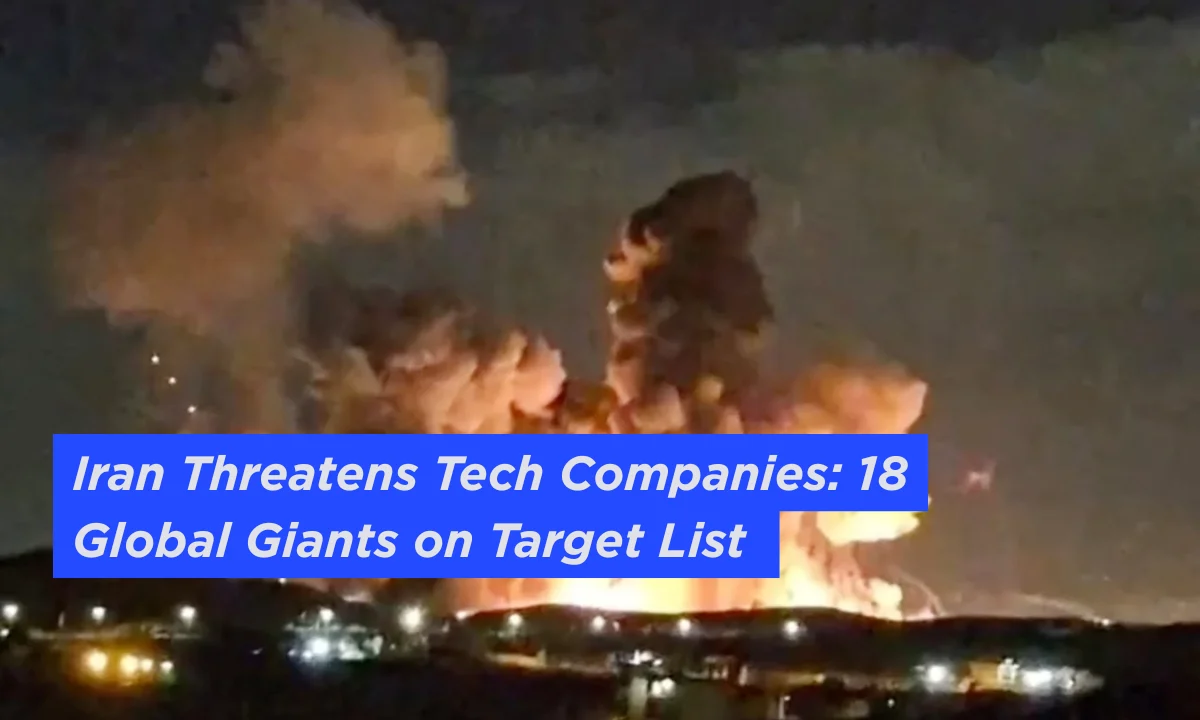
The world is witnessing a dramatic shift in how warfare is conducted. Iran threatens tech companies in a move that has sent shockwaves through the global technology industry.
On April 1, 2026, the Islamic Revolutionary Guard Corps (IRGC) issued a stark warning that marks a turning point in modern conflict. For the first time in history, major civilian technology corporations have been explicitly named as military targets by a nation-state actor.
This development represents more than just a regional dispute. It signals the arrival of a new era where data centers, cloud infrastructure, and artificial intelligence systems become legitimate targets in armed conflict. When Iran threatens tech companies like Apple, Google, Microsoft, and Tesla, it fundamentally challenges the assumption that corporate technology infrastructure remains neutral in times of war.
The implications extend far beyond the Middle East. With over $300 billion invested in Gulf region data centers and AI infrastructure by major tech companies, the threat disrupts global technology supply chains and raises serious questions about the future of digital infrastructure in conflict zones.
Understanding why Iran is attacking tech companies requires examining the intersection of artificial intelligence, modern warfare, and geopolitical strategy.
This comprehensive blog post explores the full scope of this threat, examines the companies at risk, analyzes the underlying motivations & discusses what this means for the global technology landscape.
What Exactly Happened: The Iran Tech Companies Threat Explained
The IRGC Warning Statement
On March 31, 2026, Iran’s Islamic Revolutionary Guard Corps issued a formal statement through its Telegram channel and the state-linked Tasnim news agency. The message was direct and unprecedented in its scope. The IRGC declared that 18 major United States companies would be considered “legitimate targets” beginning April 1, 2026, at 8:00 PM Tehran time .
The statement specifically warned: “Since the main element in designing and tracking terrorist targets are American ICT and AI companies, from now on, these main institutions will be our legitimate targets” . This declaration marks a significant escalation from traditional military targeting to include commercial technology infrastructure.
The IRGC’s warning included specific instructions for employees and nearby residents. The message stated: “We advise the employees of these institutions to immediately leave their workplaces to preserve their lives” . Additionally, the warning extended to civilians living near these facilities, advising them to evacuate within a one-kilometer radius and move to safe locations .
Timeline of Events Leading to the Threat
The threat did not emerge in isolation. It follows weeks of escalating conflict between Iran, the United States, and Israel. Understanding the timeline helps contextualize why Iran threatens tech companies now.
The conflict began on February 28, 2026, when the United States and Israel launched joint strikes against Iranian nuclear and military facilities. These strikes targeted Iran’s alleged nuclear weapons program and military infrastructure. Since then, the conflict has expanded significantly.
By late March, the United States and Israel had conducted extensive operations against Iranian leadership. According to reports, Israeli forces used advanced AI platforms to track and eliminate approximately 250 senior Iranian officials . These targeted assassinations included high-profile figures such as Supreme Leader Ali Khamenei, Revolutionary Guards commander-in-chief Mohammad Pakpour, and top security chief Ali Larijani .
The targeting of Iranian leadership using artificial intelligence and data analytics appears to be the primary motivation behind the IRGC’s decision to threaten technology companies. The Iranian military wing explicitly stated that American ICT and AI companies serve as “the main element in designing and tracking terrorist targets” .
Previous Attacks on Tech Infrastructure
The April 1 threat was not the first time Iran targeted technology infrastructure. Earlier incidents provide important context for understanding the seriousness of the current situation.
On March 1, 2026, Iranian drone strikes hit three Amazon Web Services data centers. Two facilities in the United Arab Emirates were directly struck, while a third in Bahrain was damaged by falling debris from nearby attacks . These strikes caused significant disruptions to cloud services across the region, affecting banking, payment processors, and consumer services .
Following these attacks, Amazon instructed affected clients to migrate workloads to other AWS regions and redirect traffic away from the Middle East . This marked the first confirmed instance of data centers being deliberately targeted as military objectives in an active conflict .
On March 11, Iranian state media published a list of 29 “tech targets” across Bahrain, Israel, Qatar, and the UAE. This list included multiple facilities operated by Amazon, Microsoft, IBM, Palantir, Google, Nvidia, and Oracle . The IRGC designated these as “enemy technology infrastructure” and warned that “as the scope of the regional war expands to infrastructure war, the scope of Iran’s legitimate targets expands” .
Complete List of Companies Targeted by Iran
The IRGC named 18 specific companies in its threat. The following table provides a comprehensive breakdown of each company, their primary business sector, their regional presence, and the specific nature of their risk.
| Company Name | Primary Sector | Regional Operations | Specific Risk Factors |
|---|---|---|---|
| Apple | Consumer Technology | Retail stores and corporate offices in UAE, primarily Dubai and Abu Dhabi | Consumer data, device ecosystem, potential military application of location services |
| Google (Alphabet) | Search, Cloud, AI | Regional headquarters in Dubai, cloud infrastructure across Gulf states | Cloud services, AI capabilities, mapping and geolocation data, search analytics |
| Microsoft | Software, Cloud, AI | Significant corporate presence in UAE, Azure data centers in Dubai and Abu Dhabi | Cloud infrastructure, AI services, productivity software used by military contractors |
| Meta (Facebook, Instagram, WhatsApp) | Social Media, Communication | Regional offices and content moderation centers | Communication data, social graph analysis, potential intelligence value |
| Amazon Web Services | Cloud Computing | Multiple data centers in UAE and Bahrain | Cloud infrastructure hosting military and intelligence workloads |
| Tesla | Automotive, Energy | Showrooms and charging infrastructure in UAE | Energy storage technology, vehicle data, Elon Musk’s Starlink involvement |
| Boeing | Aerospace, Defense | Defense contracts and commercial aviation presence | Direct military aircraft manufacturing, defense technology |
| Intel | Semiconductors | Regional distribution and partnership networks | Chip technology used in military applications, data center processors |
| Nvidia | AI, Semiconductors | AI research and development centers, including facility in Haifa | AI training hardware, GPU technology for military AI applications |
| Oracle | Database, Cloud | Offices in Jerusalem and Abu Dhabi | Database management, cloud infrastructure, enterprise software |
| IBM | IT Services, AI, Cloud | AI research hub in Be’er Sheva, multiple regional offices | AI research, cloud services, Watson AI platform |
| Cisco | Networking Equipment | Extensive regional network infrastructure | Network infrastructure, routing equipment, potential military communications use |
| HP (Hewlett Packard) | Hardware, Computing | Regional offices and distribution | Computing hardware, data center equipment |
| Dell | Computing, Infrastructure | Enterprise sales and support across Gulf | Server infrastructure, computing hardware |
| Palantir | Data Analytics, AI | Abu Dhabi collaboration center, defense partnerships | Direct military AI contracts, Project Maven participation, intelligence analysis |
| JP Morgan Chase | Financial Services | Regional banking operations | Financial infrastructure, economic targeting |
| General Electric | Industrial, Energy | Energy infrastructure and industrial equipment | Power generation, industrial systems |
| Spire Solutions | Cybersecurity (UAE-based) | Dubai headquarters | Cybersecurity services, potential intelligence links |
| G42 | AI, Cloud Computing (UAE-based) | Abu Dhabi headquarters | AI development, cloud services, partnerships with US tech firms |
This table demonstrates that the threat spans multiple sectors and is not limited to traditional technology companies. The inclusion of financial institutions like JP Morgan Chase and industrial giants like General Electric and Boeing indicates that Iran views the entire ecosystem of American corporate presence in the region as interconnected and potentially complicit in military operations.
Why Iran Is Attacking Tech Companies: Understanding the Motivation
The AI Warfare Connection
The primary reason Iran threatens tech companies relates to the role of artificial intelligence in modern warfare. The IRGC explicitly stated that American ICT and AI companies serve as “the main element in designing and tracking terrorist targets” . This statement reflects a growing reality: technology companies are no longer neutral providers of consumer services but active participants in military operations.
Several specific technologies have drawn Iran’s attention:
Artificial Intelligence Targeting Systems: The United States military uses AI-enabled systems like the Maven Smart System to process drone and satellite imagery for target identification . This system helps frontline soldiers identify and strike military targets while assisting chain-of-command approval for strikes . Palantir, one of the companies on Iran’s target list, builds the data architecture for Project Maven .
Satellite and Geolocation Data: Google and other companies provide mapping, satellite imagery, and geolocation services that have military applications. These tools enable precise targeting and tracking of movements across conflict zones.
Cloud Computing Infrastructure: Major cloud providers host military and intelligence workloads. Reports indicate that the US military used Anthropic’s Claude AI, running on AWS, for intelligence assessments, target identification, and battle simulations during operations against Iran . When commercial cloud infrastructure carries military workloads, adversaries treat it as military infrastructure.
Data Analytics and Surveillance: Companies like Palantir specialize in data integration and analysis for intelligence purposes. Palantir openly acknowledged a strategic partnership with the Israeli Defense Ministry to provide “advanced technology in support of war-related missions” .
Retaliation for Targeted Assassinations
The immediate trigger for Iran’s threat appears to be the targeted killing of Iranian leaders using AI-assisted tracking systems. According to the Washington Post, Israel used advanced AI platforms to track and kill approximately 250 senior Iranian officials since the conflict began .
The IRGC statement directly linked the tech company threat to these assassinations: “Companies that actively participate in terrorist designs will face reciprocal action for every targeted assassination” . This positions the threat as direct retaliation rather than preemptive aggression.
The assassinations included Iran’s Supreme Leader Ali Khamenei, marking a significant escalation in the conflict. The use of artificial intelligence to identify and track such high-value targets demonstrates how technology has become integral to modern assassination operations.
The Expansion of Warfare Beyond Military Targets
Iran’s threat represents a strategic shift in how warfare is conceptualized. Traditional armed conflict focused on military infrastructure, command centers, and armed forces. The inclusion of civilian technology companies reflects the reality that modern warfare depends heavily on private sector infrastructure.
The IRGC explicitly stated that “as the scope of the regional war expands to infrastructure war, the scope of Iran’s legitimate targets expands” . This framing suggests that Iran views technology infrastructure as equally important to military effectiveness as traditional military assets.
This expansion follows earlier Iranian attacks on economic infrastructure. On March 31, Iranian drones targeted communications, telecommunications, and industrial centers in Israel, including facilities belonging to Siemens and AT&T in Haifa . A Kuwaiti tanker was also struck at the Port of Dubai, causing a massive fire .
The Scale Of Investment at Risk
Understanding the economic implications requires examining the massive investments US technology companies have made in the Middle East region.
Gulf Region AI Infrastructure Investment
Gulf states were in the middle of a buildout exceeding $300 billion in data centers, chips, and AI infrastructure before the conflict escalated . This investment was backed by major American technology companies including OpenAI, xAI, Microsoft, Amazon, Oracle, and Google .
The Pax Silica initiative of January 2026 had formally brought the UAE and Qatar into a US-led framework designed to keep advanced semiconductors away from China . This initiative represented a major strategic alignment between Gulf states and American technology interests.
Specific Company Investments
Amazon Web Services: AWS operates multiple data centers in the UAE and Bahrain. The March 1 attacks on these facilities demonstrated the vulnerability of this infrastructure .
Microsoft: The company maintains significant corporate offices and Azure data centers in the UAE, primarily centered in Dubai and Abu Dhabi .
Google: The company operates a regional headquarters in Dubai and maintains cloud infrastructure across Gulf states .
Nvidia: The company operates its largest research and development center outside the United States in Haifa, Israel. This facility was explicitly named in Iranian target lists .
Palantir: The company maintains a collaboration center in Abu Dhabi and has documented partnerships with regional defense and intelligence agencies .
Economic Impact of Disruptions
The attacks have already caused significant economic disruption. When Iranian drones struck AWS data centers on March 1, banking and payment systems across the region crashed . Enterprise software went offline, and businesses were forced to migrate operations to other regions .
The broader economic impact extends beyond direct infrastructure damage. Stock markets have reacted to the escalating conflict, with oil prices rising to $118 per barrel and US gas prices exceeding $4 per gallon . The United Nations has warned that continued military escalation could result in 3.6 million lost jobs and push 4 million people into poverty across the region .
How Tech Companies Are Responding
Technology companies have begun implementing various protective measures in response to the threats.
Immediate Safety Measures
Remote Work Mandates: Several companies have instructed employees in the Middle East to work remotely. Nvidia shut its Dubai office and shifted to remote work, with CEO Jensen Huang stating that the crisis management team was “working around the clock and actively supporting affected employees and their families” .
Employee Evacuation: Amazon instructed all corporate employees in the Middle East to work remotely and follow local government guidelines . Some companies activated contingency plans following infrastructure disruptions linked to drone strikes and airspace closures .
Travel Restrictions: Google employees were stranded in Dubai after the company’s cloud sales conference when commercial flights were cancelled . The company issued internal memos calling the situation “concerning” .
Infrastructure Protection
Data Migration: AWS advised affected clients to migrate ongoing workloads to other AWS regions and direct traffic away from the Middle East following the March 1 attacks .
Security Enhancements: Companies are reviewing physical security at data centers, though traditional security measures focus on preventing ground-based incursions and cyber infiltration rather than kinetic air strikes .
Scenario Planning: Companies are now conducting extensive scenario planning for potential future attacks. However, industry experts note that data centers cannot be easily relocated, and tech companies do not possess their own armies or air defense systems .
Corporate Communications
Most companies have been cautious in their public statements. Google issued a carefully worded statement: “The situation in the Middle East is evolving rapidly and we are monitoring it carefully. Our focus is on the safety and well-being of our employees in the region” .
Microsoft, Apple, and JP Morgan declined to comment when contacted by media outlets . This silence reflects the sensitivity of the situation and the potential security implications of public statements.
Government Responses & Military Preparedness
United States Government Position
The White House has stated that US forces are prepared to counter any attacks on American companies. An official stated: “The United States military is and was prepared to curtail any attacks by Iran, as evidenced by the 90 percent drop in ballistic missile and drone attacks by the terrorist regime” .
President Donald Trump has sent mixed messages about the conflict. He suggested the war could end in two to three weeks while also threatening to “obliterate” Iran’s energy sector if Tehran does not reopen the Strait of Hormuz and agree to a peace deal by April 6 . Trump has claimed that “serious” talks are underway with Iranian officials, though Iran has publicly denied direct negotiations .
Defense Secretary Pete Hegseth stated that the United States would continue “negotiating with bombs” while working toward a deal . This suggests that military operations will continue alongside diplomatic efforts.
Military Operations and Targets
US military operations have intensified alongside the threats. General Dan Caine, chairman of the Joint Chiefs of Staff, confirmed that US troops have begun flying B-52 bombers over Iranian territory for the first time since the war began . The US military has struck more than 11,000 targets inside Iran and is now focused on destroying supply chains vital to Tehran’s missile, drone, and ship-building facilities .
The United States recently bombed an ammunition depot in Isfahan using 2,000-pound bunker-buster bombs . This city houses one of Iran’s main nuclear facilities.
International Responses
The European Union has convened emergency meetings to address energy sector turmoil. EU Energy Commissioner Dan Jorgensen stated that the disruption will not be short-term because energy infrastructure in the region has been ruined by war .
Pakistan and China announced a five-point peace initiative calling for an immediate ceasefire, opening of negotiations, halt to attacks on civilian infrastructure, reopening of the Strait of Hormuz, and establishment of a peace agreement .
The United Arab Emirates is reportedly preparing to help US allies open the Strait of Hormuz by force, which would make it the first Persian Gulf country to become a combatant .
The Broader Implications for Technology and Warfare
The Blurring Line Between Tech and Military
The Iran tech companies threat highlights a fundamental shift in the relationship between technology companies and military operations. Technology infrastructure is no longer purely commercial; it has become critical national security infrastructure.
As Hamza Chaudhry of the Future of Life Institute stated: “We cannot think about this AI infrastructure as purely a commercial asset anymore, and to some extent, it is national security infrastructure” . This reality places tech companies in an unprecedented position where their civilian infrastructure is considered legitimate military targets.
Data as the New Front Line
The conflict demonstrates that data has become the front line of modern warfare. The Center for Strategic and International Studies noted that the strikes on data centers mark a sea change in warfare that will force tech companies to reevaluate their posture around national defense .
Modern military operations depend on massive computing power, data analytics, and artificial intelligence. As one analysis noted: “Tech companies are no longer in the back room; they are on the front lines” . This dependency creates vulnerabilities that adversaries can exploit.
Legal and Ethical Questions
The targeting of civilian technology infrastructure raises complex legal questions under international humanitarian law. While military use of civilian infrastructure can make it a legitimate target, the law requires that this determination be made before an attack, not by conducting one .
International law scholars argue that Iran’s stated rationale for striking data centers may itself be unlawful . However, this legal ambiguity offers little protection to companies whose servers are being destroyed.
The ethical questions are equally complex. Technology companies must now navigate between providing services to military customers, protecting civilian users, and ensuring employee safety in conflict zones.
Long-Term Industry Implications
The threat is likely to have lasting effects on the technology industry:
Geographic Diversification: Companies may accelerate projects in Northern Europe, India, or Southeast Asia, where power supply, regulatory frameworks, and security conditions are more predictable .
Security Architecture: The current security frameworks for data centers were designed to prevent ground-based incursions and cyber infiltration, not kinetic air strikes . New security architectures will need to address physical threats from ballistic missiles and drones.
Investment Patterns: The $300 billion Gulf region AI infrastructure buildout faces significant uncertainty. Companies will likely reevaluate investments in regions with active conflict .
AI Regulation: The use of AI in military targeting may lead to stricter regulations on AI development and deployment, particularly for dual-use technologies.
Public Reaction and Social Media Response (Data From X)
Public reaction to Iran’s threat has been mixed across social media platforms and news commentary.
Serious Concern
Many observers view the threat as a significant escalation with real potential for violence. Security analysts note that Iran has already demonstrated the capability and willingness to strike data centers, as evidenced by the March 1 attacks on AWS facilities .
Concerns focus on several areas:
- Employee safety in Gulf region offices
- Potential for cyber warfare escalation
- Disruption to global internet infrastructure
- Economic impact on technology stocks and investments
Skepticism and Political Analysis
Others interpret the threat as primarily political pressure rather than an imminent military plan. Some analysts suggest the threat aims to:
- Deter further targeted assassinations of Iranian leaders
- Extract concessions in ongoing negotiations
- Rally domestic support by framing the conflict against American corporate interests
- Demonstrate Iran’s ability to strike back against US interests
Tech Industry Commentary
Within the technology sector, discussion focuses on the implications of becoming military targets. Some commentators argue that tech companies should remain neutral in conflicts, while others acknowledge that the dual-use nature of modern technology makes neutrality impossible.
Common themes in tech community discussions include:
- The responsibility of companies providing AI and data services to military customers
- The need for better protection of civilian technology infrastructure in conflict zones
- The long-term viability of operating in regions with active military conflict
What This Means for the Future
The New Normal for Tech Companies
The Iran tech companies threat establishes a precedent that will affect the technology industry for years to come. Companies must now factor military targeting into risk assessments for global operations.
This new reality requires:
- Enhanced physical security for critical infrastructure
- Diversification of geographic presence to reduce concentration risk
- Development of rapid response protocols for employee evacuation
- Clear policies on military use of commercial technology
Implications for AI Development
The conflict highlights the military applications of artificial intelligence and the risks of rapid AI deployment without adequate safeguards. As AI becomes more integrated into military operations, the companies developing these technologies face increasing scrutiny and risk.
The use of AI for targeted assassinations, as alleged by Iran, demonstrates the lethal potential of these technologies. This may accelerate calls for international regulation of military AI applications.
Geopolitical Technology Alignment
The Pax Silica initiative and similar frameworks suggest a trend toward geopolitical alignment of technology infrastructure. Countries and companies are increasingly forced to choose sides in great power competition, with technology supply chains becoming instruments of state policy.
This alignment creates risks for companies operating globally, as infrastructure in allied countries may be viewed as legitimate targets by adversaries.
Cyber and Physical Convergence
The Iran threat demonstrates the convergence of cyber and physical warfare. Data centers are physical infrastructure that can be destroyed by kinetic attacks, but their destruction has cyber consequences that ripple through global networks.
This convergence requires new security approaches that address both physical and digital threats simultaneously.
My Final Words On Iran & Tech Companies
Iran threatens tech companies in a move that signals a fundamental transformation in modern warfare. The inclusion of 18 major American corporations on a target list marks the explicit recognition that technology infrastructure has become integral to military operations and therefore subject to military targeting.
The threat extends beyond immediate physical danger to employees and facilities. It raises profound questions about the role of technology companies in global conflicts, the protection of civilian infrastructure, and the future of AI development in a world where data centers are considered legitimate military targets.
The implications reach far beyond the Middle East. As artificial intelligence becomes more central to military operations worldwide, the infrastructure supporting AI development faces similar risks. The line between civilian technology and military application has blurred beyond recognition.
For technology companies, policymakers, and users alike, the Iran tech companies threat serves as a wake-up call. The digital infrastructure that powers modern economies is no longer separate from geopolitical conflict. It sits at the center of it.
Understanding why Iran is attacking tech companies requires accepting a difficult truth: in the age of AI warfare, technology is not neutral. The companies that build, maintain, and operate our digital infrastructure have become participants in global conflicts whether they choose to be or not.
The future of technology development will be shaped by this reality. Companies will need to invest more in physical security, diversify their geographic presence, and carefully consider the military applications of their products. Governments will need to develop new frameworks for protecting critical technology infrastructure.
The Iran threat of April 1, 2026, will be remembered as a turning point. It marks the moment when technology companies officially joined the front lines of global conflict. How the industry responds will determine not just the safety of employees and infrastructure, but the future trajectory of technological development itself.
Related Posts :



Share This Post